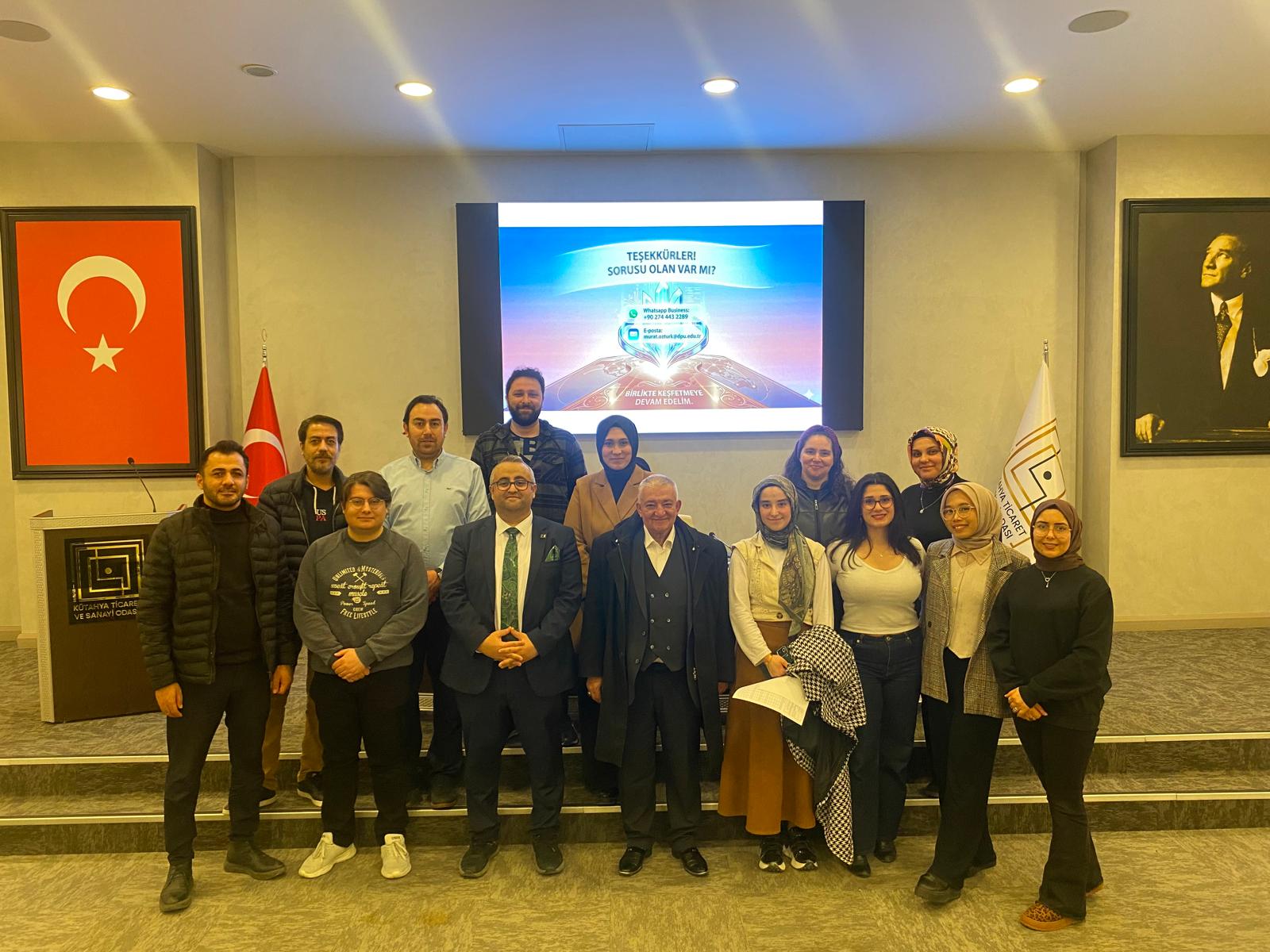
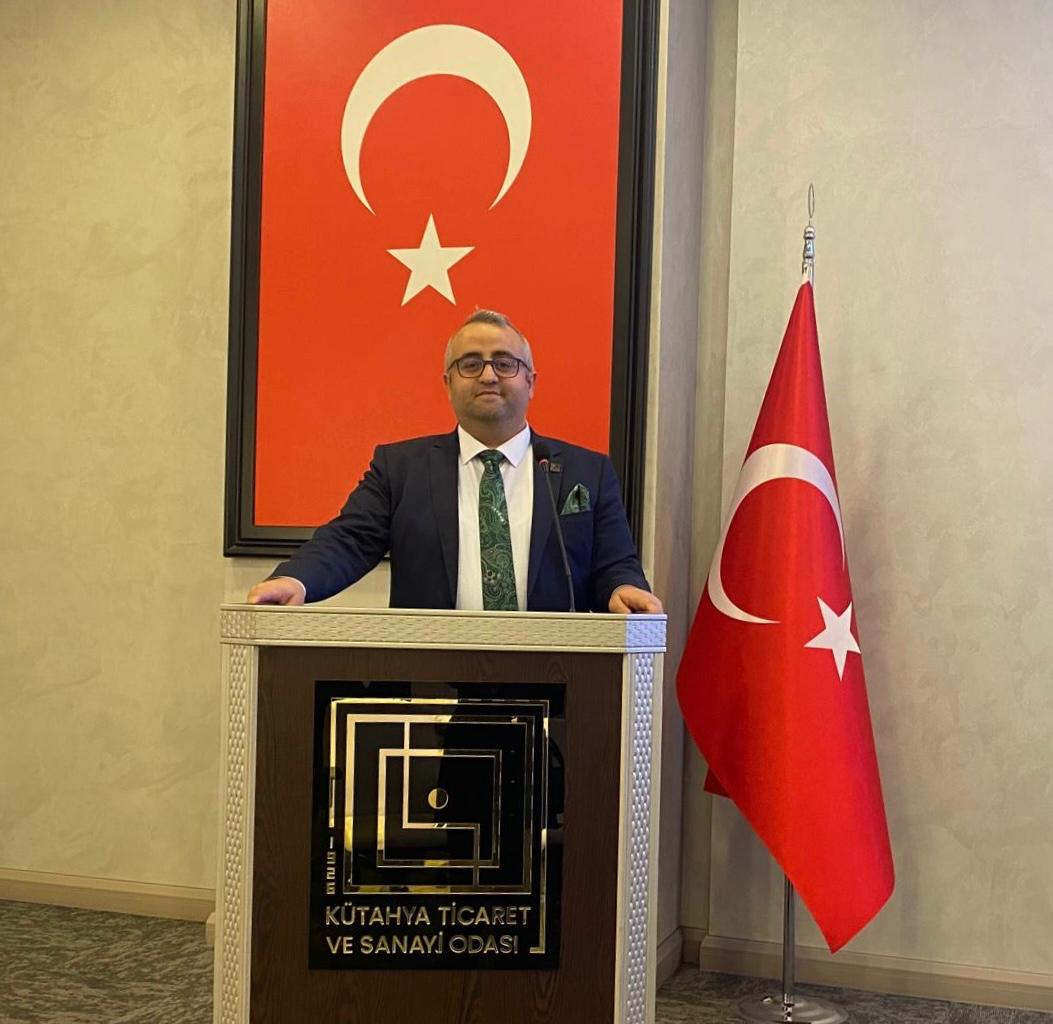
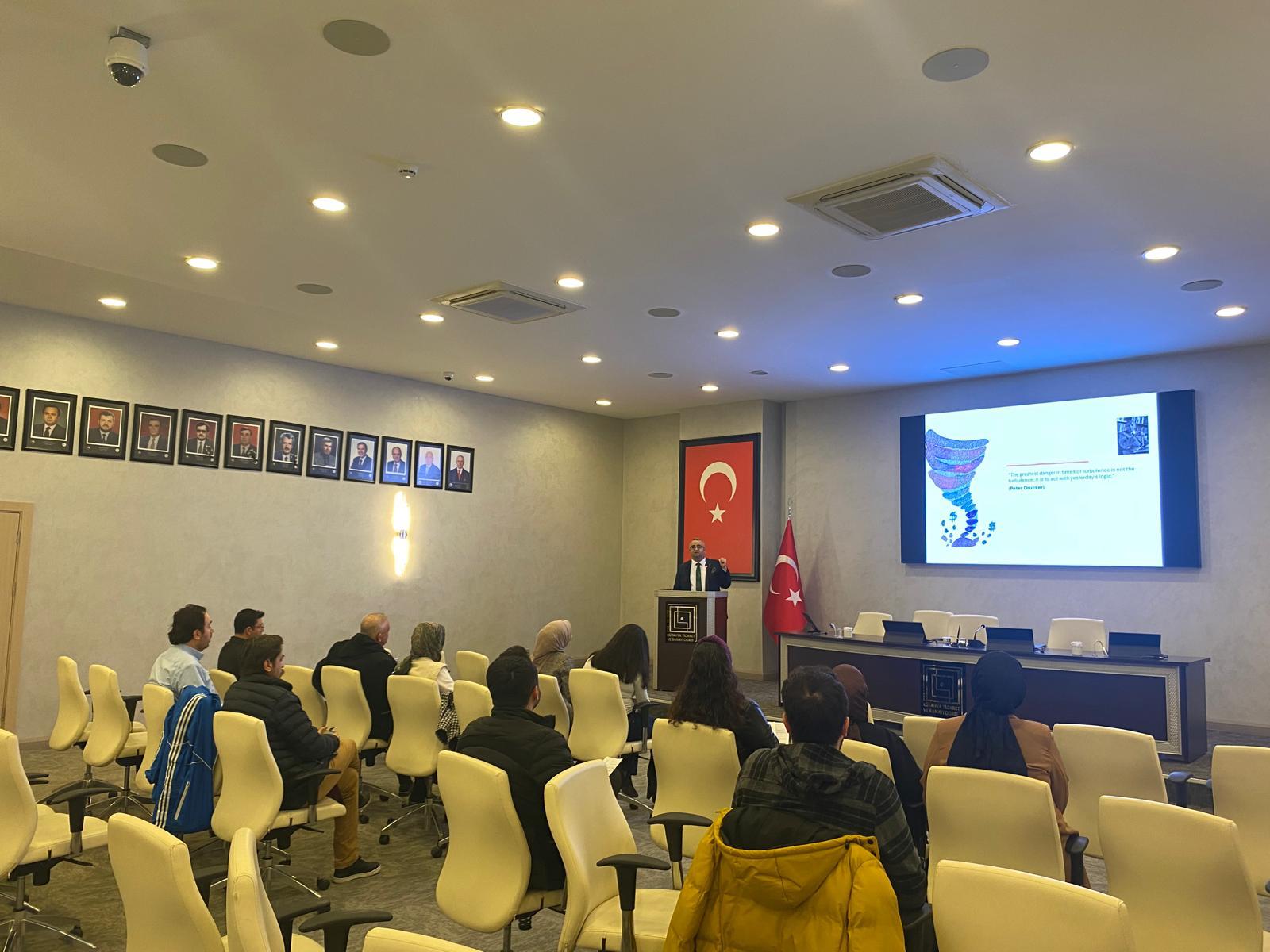
The Kütahya Chamber of Commerce and Industry (KUTSO) continues to provide training programmes for its members. Within this framework, a training session entitled “The Direction of International Trade” was held in the Chamber’s conference hall.
The training was delivered by Dr. Murat Öztürk, Faculty Member at Kütahya Dumlupınar University and Academic Advisor to the Union of Chambers and Commodity Exchanges of Türkiye (TOBB). The session addressed the current structure of global trade, the dynamics of its transformation, and forward-looking projections.
During the training, the key factors shaping the direction of international trade were examined in detail. Topics included shifts in trade flows across countries, intersectoral transitions, the evolution from goods trade to services and digital trade, the repositioning of supply chains, and the impact of geopolitical developments on trade.
In addition, the impact of technological transformation—particularly artificial intelligence and digitalisation—on trade processes was highlighted, along with the growing importance of sustainability and the green transition.
The presentation also covered recent prominent trends in global trade, including the slowdown in trade growth, the effects of inflation and interest rate policies, vulnerabilities in supply chains, and increasing geopolitical risks. Particular attention was drawn to the strengthening of protectionist tendencies, especially in the manufacturing sector, driven by rising tariffs.
Furthermore, the role of digitalisation in international trade was addressed. It was noted that digitally deliverable services are among the fastest-growing areas in global trade, that e-commerce is becoming increasingly widespread, and that technologies such as artificial intelligence and blockchain are being actively integrated into trade processes.
It was also emphasised that global trade is evolving towards a multipolar structure, with regional trade blocs gaining strength and new trade corridors emerging. In supply chains, the shift from the “Just-in-Time” model to the “Just-in-Case” model was highlighted, bringing concepts such as risk management, flexibility, and resilience to the forefront.
Finally, new opportunities for small and medium-sized enterprises (SMEs) were evaluated. It was stated that the expansion of e-export, easier access to global markets through digital platforms, and the corresponding increase in global competition are key developments for SMEs.
Source: KUTSO Press